Bob Lutz in the FastLane Blog

Stop the presses!

Bob Lutz (aka The Man) is blogging up a storm over at FastLane Blog

So far as I can tell, the content (if not the typing) really does come from Lutz, not from some junior MBA over at GM.  And as one would expect from the premier product guy of the Known Universe, his blog, though young, already contains many tasty bits, such as this thought about Saturn:

What would you do if you had a brand whose customer service  reputation was that high for that long despite having a narrow, aging
product lineup? I, for one, would first get down on my knees and thank
the Maker for the finest retail network in the industry. Then, I would
set to work replenishing the product portfolio.

And this one on design thinking:

The creative process is not, nor will it ever be, “scientific.” You
cannot start with quantitative research to find the “big idea.” Whether
it’s cars or movies or clothes, a company needs inspired, free-ranging
discussion among its top creative people.

Beyond the massive wisdom about design, innovation, marketing, and leadership to be found in Mr. Lutz’s blog, we also need to celebrate FastLane as a milestone in the history of corporate blogging.  A while ago I praised the actions of Honda CEO Takeo Fukui, and asked the question "What if the CEO knew his products?"  With Lutz raising the ante, maybe the right question to ask now is "What if the CEO could write a believable blog about his products?"

Bob Lutz blogging?  This bodes well for the future of mankind.

Green Eye for the Conventional Guy

Green Eye for the Conventional Guy

Let’s face it: as a society we’re never going to have our environmental act together 100%.  So instead of waiting for that magic day when everthing goes cradle-to-cradle, why not start making better purchase decisions today?

For example, I’m going to make a personal eco-babystep by finding a way to reduce the quantity of paper cups and plastic lids I use from Peet’s.  And while I’m there I’ll ask for a fillup with Fair Trade brew.

Tsunami Overview

The New York Times has designed an excellent overview of the physics, timeline, and impact on humanity of the tsunami.  More than any report I’ve read in the paper or seen on television, this multidisciplinary piece of design work makes me feel and understand what has happened there. 

In some sense it’s shallow to crow about the power of integrative, design-led thinking in the context of such a disaster.  On the other hand, perhaps our future ability to reduce the damage from this type of disaster will be realized using just this sort of integrative thinking and doing.

link awareness courtesy of Design Observer

Cool Books of 2004

Another list.  Here are my favorite reads of 2004. No claims to comprehensiveness or consistency, and not all were published in the past year; just a list of books that made me think different in 2004:

On Intelligence, by Jeff Hawkins:  an elegant book on the nature of intelligence and how the brain works.  The good news for metacool readers is that "real intelligence" is the way that designers think.

The System of the World, by Neil Stephenson: third in the baroque triology, capable of stimulating latent nerdism, and a helluva of a long book, it continues Stephenson’s fascinating journey through the origins of modern finance and computing.  I loved every page of it.  Not for everyone, which is refreshing.

The Innovator’s Solution, by Clayton Christensen: forget the hype, the content is outstanding.  Clay tested the ideas in this book on my class at Harvard Business School, and yet I still find something fresh and interesting each time I go back to its pages.  The chapters on need-based market segmentation strategies are excellent.

Porsche: Excellence was Expected, by Karl Ludvigsen:  perhaps the best business book of 2004, unfortunately Excellence is marketed as a car book, which will keep it out of the mainstream.  In a world where marketing-led "brand building" is an oxymoron, Ludvigsen shows how Porsche built a brand with deep integrity piece by piece, slowly evolving it over time.  His discussion of the genesis of the Porsche Cayenne SUV also shows how quickly a brand can be diluted and maimed by managers out to make a quick buck.

Orbiting the Giant Hairball, by Gordon MacKenzie:  any book recommended by both Richard Tait and Bob Sutton (both proponents of humane business practices, and really good guys themselves) has to be good, and Hairball delivers.  Look, any organization will have its problems, and those problems can seem particularly nasty when seen from the inside.  The real question is: do you care enough about those problems do something about them?  Hairball is a guide to engaging with an organization to help solve its problems without losing your soul.  It also contains some great advice about dealing with nasty behaviors in the workplace, including teasing, which has run rampant in every org I’ve ever worked in.

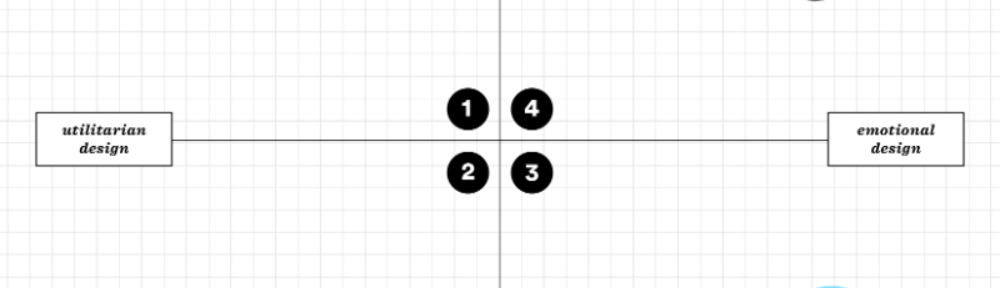
Emotional Design, by Donald Norman:  if you haven’t noticed, I’m
quite taken by this wonderful piece of thinking.  His
Visceral-Behavioral-Reflective model of human cognition is a powerful
way to understand slippery concepts like brand and meaning, making this
one of the most important books on marketing (where marketing is the process of understanding human needs and creating offerings to meet those needs) to come out in years.  His
message about beautiful things working better is important, too.  Read
this one.

Designing Adidas, Designing Zissou

Wes Anderson designs every element of his movies.  While most motion pictures are staged sets overlaid with a thin veneer of reality, Anderson’s movies are true portraits of alternate realities where every detail is premeditated.  In The Royal Tenenbaums, for example, he needed to film the Tenenbaums in a home-like setting, so he went out and converted a grand old New York house into a functioning movie set.  The Real Deal.  Part of the pleasure watching an Anderson movie is picking out all the interesting stuff on screen — he has an eye for interesting designs. 

That’s why I’m so stoked to see The Life Aquatic with Steve Zissou.  It looks to be full of cool stuff from the golden age of Cousteau.

10jan04 Zissou Update:  for those of you trying to find Team Zissou Adidas shoes, they don’t exist.  But they might soon if you bug Adidas enough.  Go to Josh Rubin’s blog to send them an email, or sign Reuel Alvarez’s online petition.  Customer evangelism, indeed!

What will it be like in motion?

A while back I argued that the temporal aspects of design often get ignored by designers.  Most designers, I’d wager, don’t think about how their design will look in a year, let along five or ten.  Similarly, many don’t think about what their design will look like during use — what will it be like in motion?

There are exceptions.  Good software designers obsess over this question.  After all, the quality of a user interface is dictated in no small part by the way in which it helps a user move through a single task, and then from one task to another.  Spend any amount of time designing a software interface, such as a website, and you’ll become very sensitized to how your solution works when it is in motion.

In my opinion, not many designers of physical products think about their product in motion, but they should.  Most products get designed on a piece of paper or on a screen, so it becomes easy and normal to think of them as Platonic forms existing on a still life of white or black.  But when designers do take into account motion, cool things can happen.  For example, some cars that seem ugly sitting in the driveway become objects of beauty when seen carving their way up a curvy, mountain road.  A knife can have a more or less appealing form, but its true beauty comes with use.

So what would happen if we thought of all designs in terms of movement?  Grant Petersen of Rivendell Bicycle Works (the most vibrant, real brand on the planet, in my opinion) took that idea and came up with a patented innovation, the SpeedBlend bike tire:

10054

The colors on the SpeedBlend tire sidewall are interesting when seen standing still, but come alive when spun — which takes Petersen’s design from just another eccentric bike tire to something more about magic and fun:

Fa1g3679

Design for Free Culture

In early November I attended the pod casting discussion at BloggerCon.  Toward the end of the pod casting session, Larry Lessig pointed out that it would be great if technologists driving the design of podcasting software could do it in such a way as to make the entire domain of pod casting hard for would-be naysayers to grok.  Essentially, his point was that technology creators and facilitators should think about the larger societal context in which pod-casting operates in order to keep the copyright fun sponges out of the picture. 

Too often designers and technologists completely avoid asking the question "Who will expend energy actively blocking this innovation of mine?".  It would be a great thing if that question started getting asked with more frequency.  Even better would be to involve legal types in the early design phase of a new technology so as to design in barriers to prevent the naysayers from dictating how people should and can use a particular technology innovation.