My workplace is a weird and wonderful place

As a rule, I don’t write much of anything here about my job at IDEO, but in this case, I have to make an exception.

Here’s what life looks like in place that likes to build stuff, do stuff, and generally kick ass.  We have a yearly Halloween party where various IDEO’ers put together costumes, scarf some pizza, and generally have a good time.  This year, however, the ante got upped, and things were, well… thrilling.

In what kind of organizational culture do people dedicate multiple lunch hours to practice dance moves?  This one.  Creative genius at work.  And look at the all the obvious love and support they get from assembled coworkers.  Cool.

Designing by influence

The current issue of Fast Company has a great article about the way HP’s corporate design group influences the rest of the organization.  I found the article fascinating — it’s a great example of designing for business.

It’s also a good example of why there’s no silver bullet when it comes to getting an organization to integrate the design process in to the way it goes to market.  I love most of Apple’s products, but I also realize that the way it goes about innovating — a centralized, low-variance, top-down approach — isn’t the answer for every organization.  With HP, for example, you have a decentralized company where the leaders of individual business units are very powerful.  A centralized innovation model based on power wouldn’t work well there.  As the article shows, what does seem to be working at HP is an approach based on influence, as well as on showing the distributed decision makers what could happen.  It’s all about looking hard at the constituent parts that make up a culture — people, resources, processes and values — and then structuring a congruent approach.  Good stuff.

Strategy that makes your hands bleed

I’m mildly addicted to cable TV.  I simply can’t get enough of two shows on Discovery Channel: Dirty Jobs and Build it Bigger.  Both of these shows revolve around a witty, game, and willing host who puts himself in to the middle of projects where things are being built, renovated, restored, maintained, or torn down.  These aren’t shows about stuff, they’re shows about the reality of making stuff and keeping stuff viable.  I call them "build" shows because they deal with atoms, not just ideas, and atoms tend to have a mind of their own… building things is a tough past time.  Talking about doing things is one thing; doing them is quite another.

I’m a big believer in knowing how to build things before you begin to decide what to build.  In other words, at an individual, team, group, and organizational level, deeply understand execution before you engage in strategy.  If innovation is about using ideas to make a change in the world, then the ability to execute is vital, and the ability to know what can be executed is even more important.  Building informs one’s ability to know what will work the next time you go to the strategy board.

Building is not only important as a way to shape one’s ability to formulate strategy.  Especially important is the notion that building is strategy, or that building as you go is a key way to coax an emergent strategy in to being.  The other day I was shooting the breeze with a colleague who made the observation that the way we (him, me, and design thinkers in general) formulate strategy is by making our hands bleed.  We in other words, we take our notions of strategy and build them, whether they be of bricks or bytes, and we let the results kick the crap our of precious notions of what should have worked.  Sometimes building a prototype will literally cut your fingers  — or, heaven forbid, take them off — but even a HTML protoype can deal a nasty sting to one’s ego.  But that’s the way to go. Know by doing, do because you know.

Perhaps strategy should make your hands bleed.

Finding Steve Fossett

I just spent part of an hour looking for Steve Fossett via Amazon’s Mechanical Turk.  Fossett has been missing since he took off in a Citabria on September 3.

Planedimensions_2

It was very easy.  I searched about 7 square kilometers of Nevada in just 40 minutes.  Here are the directions given by Amazon:

Instructions

You will be shown a single satellite
image. The task is to flag any satellite images which contain foreign
objects that may resemble Steve’s airplane or parts of a plane. Steve’s
plane will show up as a regular object with sharp edges, white or
nearly white, about 21 pixels long and 30 pixels in wingspan.

Notes

If in doubt, be conservative and
mark the image. For complete coverage, we’ve set up this HIT such that
multiple people will cover the same area several times over. Please do
your best, but do not worry that missing one little detail will be
tragic. It will get caught.

Marked images will be sent to a team of specialists who
will determine if they contain information on the whereabouts of Steve
Fossett.

Friends and family of Steve Fossett would like to thank you for helping them with this cause.


You basically just scan, and click "yes" or "no".  Here’s what the interface looks like:

Stevefossettmetacool

Per the open source dictum that many brains make deep bugs shallow, I hope that in this case many turks make a lost plane findable.  This a striking yet tragic example of the power the web has to facilitate networked collaborations of broad scale and scope.  You can help here.

Director’s Commentary: the Ferrari F2007

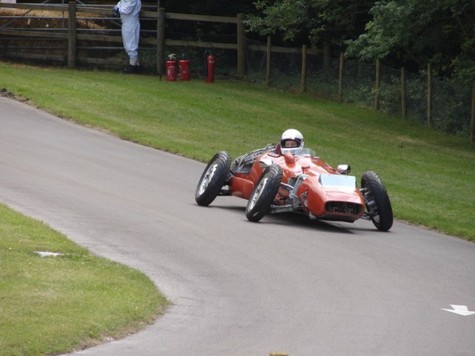
Here’s a Director’s Commentary by proxy.  Former Formula 1 mechanic turned author and commentator Steve Matchett walks us around some of the aerodynamic details on the Ferrari F2007 Formula 1 car. 

Warning!  There’s a lot of gearheadedness here.  It’s a quick watch though, and even if you’re not in to the extreme technological thinking that goes in to a modern F1 car, it is worth thinking about this:  what might happen if all the human ingenuity currently being poured in to carving out the tiniest margins of relative performance were instead focused upon creating paradigm shifts in the way we move across the planet?  That would be mind-boggling, I suspect.

Unfortunately, motorsports has become largely a game of incremental innovation.  It needs to be a place where revolutionary innovation is not just encouraged, but essential.

Well, a guy can dream.  Until then, tomorrow’s Grand Prix is at Monza, my favorite circuit on the calendar.  It’s the hallowed ground were the greatest racers like Nuvolari, Fangio, and Moss all plied their craft.  I might even get up at 4am to watch it live. 

Go Massa!  Forza Ferrari!

A wonderful book about an amazing innovator

Dsc02707

The past few weeks I’ve had the pleasure of making my way through a wonderful book about the amazing life and times of Bill Milliken.   The title is Equations of Motion: Adventure, Risk and Innovation.  An MIT engineer by training, Milliken’s varied and exciting life makes Indiana Jones seem a wimp by comparison, and places Buckaroo Banzai in the category of simpleton.  Here’s his bio from the publisher of the book:

William F. Milliken was born in Old Town, Maine in 1911. He
graduated MIT in 1934. During World War II he was Chief Flight Test
Engineer at Boeing Aircraft. From 1944, he was managing director at
Cornell Aeronautical Laboratory (CAL/Calspan), retiring as the head of
the Transportation Research Division, which he founded.

Bill joined the SCCA in 1946 (Competition License No. 6) and
contested over 100 races as well as holding many responsible club
positions. Milliken Research Associates was founded in 1976 and
continues as a foundational research asset to the automotive and auto
racing industries. Bill remains active in MRA, which is now run by his
son, Douglas L. Milliken.

Bill is co-author of Race Car Vehicle Dynamics and Chassis Design.
He is an SAE Fellow, member of the SCCA Hall of Fame, recipient of the
SAE Edward N. Cole Award, the Laura Taber Barbour Air Safety Award and
many other citations for innovation.

Today Bill lives in the Buffalo, New York area with his wife,
Barbara. He continues to consult with racing and chassis engineers. He
jogs around the half-mile track behind his home and spends several
evenings at the gym.

This book works on many levels.  It’s a fascinating look at the world of aviation pre- and post-WW II.  You get a ringside seat at the dawn of the sports car movement in the United States.  It is an honest glimpse at what life was like in America around the turn of the Twentieth Century, and what it feels like to enter early adulthood under the weight of a major economic depression.  Most of all, it’s a tribute to what it means to be a racer, to be an entrepreneur and a generative person, to get up each morning and say "How am I going to change the world today?".

I believe "design" is a verb and "innovation" is best thought of as the outcome of relatively tight set of behaviors and life attitudes embodied to their fullest by people like Bill Milliken.  He designed his life, and continues to live a remarkable one today.   

I love this book.

PS:  if you don’t have the time (or inclination) to read Equations of Motion, please take a look at this charming profile of Milliken written by Karl Ludvigsen: Mister Supernatural
Imagining innovative behavior, vividly

I don’t believe creativity is about thinking outside of the box.  I think it’s about making connections across otherwise unconnected boxes; it’s about pattern recognition.

So, if you will, please indulge me as I communicate a creative link I just made across the writing of two of my colleagues/friends/fellow bloggers, Bob Sutton and John Maeda.  Lately I’ve been thinking a lot about what happens when human nature meets the need for organizations to be scalable and sustainable, and I think Professors Sutton and Maeda have — quite independently — hit upon a key point.  First, Maeda:

When I was younger, I often tended to think the worst of others when
I felt sleighted in some seemingly unfortunate way. "I have been
wronged because other person X has intentionally wronged me with motive Y." I punish the other person by publicly expressing person X’s (alleged and) imagined motive Y.

Often you discover that your imagination has done its work the way it
should — it imagined something happened in elegant detail without ever
actually happening. The net result is not only embarrassment, but even
worse your own poor intentions or habits with respect to others are
revealed. You imagine most vividly what you do yourself.

The best route is to avoid situations of thinking ill of others by
enacting exemplar behaviors yourself. You are likely to be in a better
position as you are in a better mood and more resilient to adopting
negative behavior — thus affecting your surrounds with the positive
energy necessary to do amazing things in this world.

And then Sutton, as expressed in two points from his "15 Things I Believe" manifesto:

6.
You get what you expect from people. This is especially true when it
comes to selfish behavior; unvarnished self-interest is a learned
social norm, not an unwavering feature of human behavior.

8.
Avoid pompous jerks whenever possible. They not only can make you feel
bad about yourself, chances are that you will eventually start acting
like them.

I believe quite strongly that people are more likely to engage in innovative behavior when they are in a flow-like state of happiness.  It’s hard to be innovative when you are unhappy yourself, because as Maeda says, "You imagine most vividly what you do yourself."  And it’s hard to engage in innovative, value-creating behavior when you’re only looking out for Number One — all the innovative cultures I’ve had the pleasure to work in were notable for their relative lack of narcissistic behavior.  If, as Sutton says, "… unvarnished self-interest is a learned social norm…", then innovative behavior should be one, too.  People aren’t innovative or not, but their behaviors, thoughts, and attitudes are.

Thank you for the connection, John and Bob.