Will Sports Cars Die?: Venturi Fetish

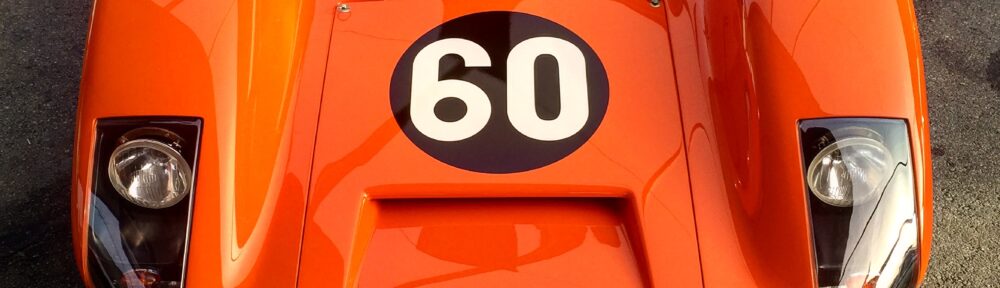
What will the sports car of the future be like?  There’s no reason why the sports car of the future couldn’t be electric.  After all, Ferdinand Porsche’s first automotive design used electric, and not gas, motors.  In fact, electric motors have an inherent advantage over internal combustion engines in that they provide maximum torque at zero RPM, which makes for absolutely smashing acceleration.  The Venturi Fetish is all-electric and will do 0-60 in 4.3 seconds. 

But how do we cradle-to-cradle the battery packs?  And how do I get some extra juice when I’m stuck on I-80 in Nevada? 

Will Sports Cars Die?… continued

I recently spent three wonderful weeks driving 4,500 miles around the western United States.  My faithful steed was a front wheel drive Honda Accord with a 2.2 liter, 4 cylinder engine making 130 horsepower (not a dissimilar configuration to the original car of the future, the Citroen DS), and I averaged 34 mpg for the entire trip.  Mind you, my right foot is an exotic alloy of lead, tungsten, and depleted uranium, so those mpg’s were acquired at average cruising speeds well above 80 mph.

Funny thing was, I saw only a few other sedans on the road.  Everyone else was driving RV’s, SUV’s, or monster pickup trucks with stonkin’ 10-cylinder diesel motors.  These wavering hulks scared the bejeezus out of me on the highway, and the hum of their knobby tires on the highway kept me awake at night in my tent.  I saw one mow down some deer without stopping. Three tons of steel to transport a few hundred pounds of human DNA?  How stupid and silly: this trip convinced me in a fundamental way that our current automotive trajectory isn’t sustainable.  We need to radically change our conception of what a car/truck/RV should be and do.

So, the interesting question isn’t “will there be sports cars?”, but rather “what will cars be, and what will a sports car be in that context?”.  Along those lines, here’s a thought from an AutoWeek profile of Leonardo Fioravanti, father of tasty sports machines such as the Ferrari P6 (!!) and Ferrari Daytona (!!!!):

"My expectations for the future are that a large part of the cars cannot be polluting. In my mind, we will have to put beside this kind of vehicle a number of sporty and exciting ones."

Fioravanti designed many of the most exquisite expressions of internal combustion.  He’s Mr. Red, Loud and Fast.  But now he’s saying we need silent cars, cars that take care of us, cars that let us sleep well at night, literally and figuratively.  Think about it – I certainly will.

metacool Thought of the Day

“The central console is deeply irksome, too, with all of its small buttons and secondary control thingies. You never know if they’re not working because they’re Italian and you can’t understand them or because they’re Italian and they’re broken. They make the best argument yet for i Drive.”

— Jamie Kitman, on the Maserati Coupe

More on Ugly Ferraris

"…Ferraris have to be beautiful.  If I look at the overall car market, I don’ t like too many designs at the moment.  The romance of design is being lost.  The language is too aggressive, too confrontational.  The ’50s and ’60s on the other hand was an era of artistry and beauty and I want to bring some of that feeling back.

If cars are beautiful, people want them, now.  I’ve never bought a product hoping I’d like the look of it in six months."

— Frank Stephenson, Design Director for Ferrari & Maserati 

[I think this means we’ll begin seeing beautiful Ferrari automobiles again soon]

Will Sports Cars Die?


"In just a very few years in the mid ’50s the most beautiful sports cars ever made appeared: the Lancia B24, the MGA, the Lotus Elite.  Why?  Any design reflects the psychological reality of those responsible.  Designers in the ’50s could entertain the prospect of driving fast and free.  Their response was to doodle and then shepherd into manufacture sports cars.  Our psychological reality is rather grimmer.  This is why designers today doodle utilitarian vehicles.  This is why the sports car will soon be dead."     – Stephen Bayley

While I agree with Bayley’s assessment of the influence of culture on design – the culture of a designers is inescapably embedded in the designed object –  I differ as to the outcome.  Yes, our society is more militant and afraid than it was during the romantic era of automotive design, but I don’t believe the sports car will die out completely as a result.  Instead, it will become a low-volume, niche product for a small and dedicated group of gearheads whose primary interest is in the visceral and behavioral elements of the automobile – they want know what it feels like to be connected to steering, the gearshift, and the throttle.  All those people who bought sports cars merely for their reflective, I-want-to-get-laid value (i.e. Corvette owners) are now buying Hummers and will buy whatever is au courant.

Critics have been moaning about the impending death of the sports car for quite some time.  Professor Ferdinand Porsche expressed this counter argument over 25 years ago:

“Even in the unlikely event of the car disappearing one day from the road, we will still have the sports car.  If we take the horse as an example: as a working animal it is practically non-existent, but in the field of leisure and sport there are many more horses today than ever before.”

It’s common today to hear about “horse people”, individuals who structure their lives so that they can slake their passions for the animals.  Perhaps the same will happen with sports cars.

Wynton Marsalis on What’s Important

“You can reach a situation where things of intelligence and refinement and culture can be considered elite, and things that are crass and ignorant can be considered to be real and of the people; when you begin to have the mass of the populace believing that they should strive for something that’s not worth striving for, then tremendous amounts of energy goes into the worthless and the maintenance of that which is worthless.

That’s a battle we all fight, even within ourselves. You have to actively pursue knowledge. It’s out here for you. But you gotta go out and get it. You gotta want it. And you’ve gotta keep wanting it.”

— Wynton Marsalis

iBag

Schlepped down to the local Apple store the other day and picked up a minty new iPod. Needless to say, I’m a very happy new iPod owner.  But this post isn’t another ode to Ive’s tiny white brick – I’ve already written that one.  Instead, let’s talk about the bag it came in.

The bag.  Dangling from my hand, it made me feel so good walking down the street after issuing grievous wounds to my Visa.  The relatively dense iPod package felt secure within the plastic bag material, whose silver finish positively glinted in the late summer sun, and the two carrying cords were positively intriguing: do I sling it from my hand or shoulder like a sack, or do I go for the metrosexual thing and wear it as a mini backpack.? I went the sack route.

So it’s a beautiful, wonderful thing of a bag. Again, Norman’s tripartite model of cognition helps analyze what’s going on here at a more intellectual level:

Visceral (feel):  silver, smooth, shiny, whole and integral – all pure Apple aesthetics.
Behavioral (function): a bag’s bag, with a wide, closable mouth, strong material, stout metal eyelets to increase load capacity, resilient plastic material, convenient carrying cord which allows multiple bearing modes.
Reflective (meaning): I rarely feel good about carrying a branded shopping bag, but I felt proud to have this thing – “Hey, he just bought something at the Apple store – cool!”

Not surprising that Apple would do a bag so well.  From the standpoint of building and enhancing the brand, this bag is worth ten times any incremental cost over a more mundane solution.  It’s about a seamless brand experience.